


Thermal Soil Remediation Technology
Contaminant
Destruction
m³ Treated
Globally
Operational
Since
Across the oil and gas, industrial, defence and aviation sectors, the world generates millions of cubic metres of hazardous waste including soils, sludges and other residues — API sludge, tank bottoms, drill cuttings, recalcitrant hazardous wastes including Dioxin, PCB, PAH, and PFAS — that conventional methods cannot cost-effectively treat. HOTTPAD changes the equation: a flameless, self-sustaining combustion process that destroys contaminants on-site, eliminates transport liability, and returns clean, reusable soil. No continuous fuel input. No ash residue. No fixed facility required.
The Process
How HOTTPAD Works
01
Load & Configure
Waste homogenised and loaded onto the engineered air-permeable pad. Supplementary materials blended as required.
>99.9%
Contaminant Destruction
02
Ignite
Pad base heated to initiation temperature. Air injection begins — smouldering front established within hours.
4–7d
Typical Batch Cycle
03
Self-Sustaining Propagation
Flameless front travels upward at 500–1,100 °C, driven by the waste’s own calorific value. Zero external fuel beyond ignition.
1,000+
m³/Week Capacity
04
Recover & Reuse
Treated output resembles clean native soil — contaminant-free, suitable for on-site reuse or responsible disposal.
2 – 1000m³
Scalable Volume
Competitive Advantage
HOTTPAD vs. Conventional Treatment
|
Criteria |
HOTTPAD |
Incineration / Off-Site Disposal |
|---|---|---|
|
Energy Source |
Waste’s own calorific value |
Continuous external fuel required |
|
Transport Required |
None — treated on-site |
Significant cost & liability |
|
Treatment Outcome |
99.9% contaminant destruction |
Variable; common byproducts |
|
Treated Material |
Reusable clean soil |
Ash / residue for disposal |
|
Scalability |
2 m³ to >1,000 m³/batch |
Fixed facility size |
|
Carbon Footprint |
Low — no transport, no fuel |
High |
|
Remote Deployment |
Fully portable systems |
Not feasible |
Waste Streams
Target Applications
API Separator & Tank Bottom Sludge
High-volume refinery and terminal waste treated in-situ, eliminating haulage cost and risk.
Hydrocarbon-Impacted Soils
Brownfield remediation across C6–C50+ organic fractions. Effective on low-permeability clays where bioremediation fails.
PFAS, PAH, Dioxin and Asbestos
Thermally recalcitrant contaminants destroyed at temperatures conventional methods cannot reach.
Highly Variable Feedstock
Versatile across a wide range of difficult to manage waste streams, including soils, sludges, biosolids, processed wood waste, concrete and other solids, and oily waste, concentrates and liquids of variable viscosity.
Complex and Combined Waste Treatment
Reduce time, cost, carbon and landfill footprints by combining solid and liquid waste streams. Examples include combining contaminated soils with liquid oily waste, and spent GAC from WTPs with PFAS-impacted source soils.
Stranded & Stockpiled Waste
Legacy stockpiles with no practical off-site pathway, for example, oil based drill cuttings – mobilise HOTTPAD directly to the asset.
System Options
Configurations
Portable
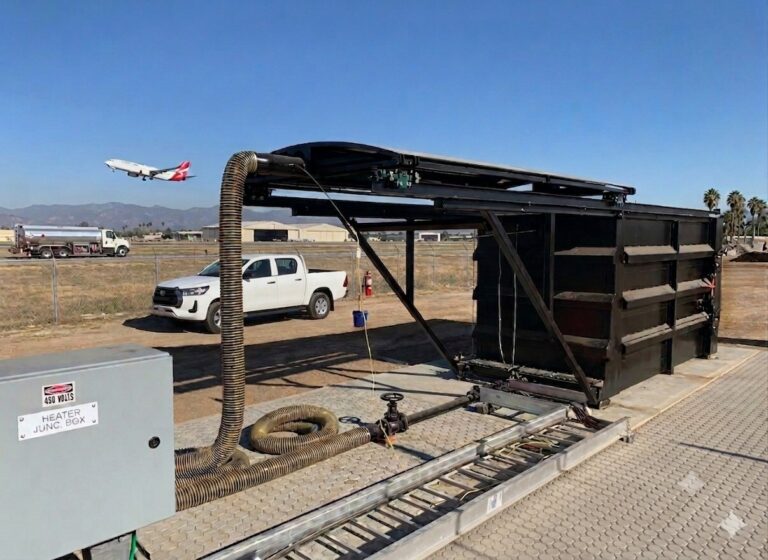
Field Portable Unit · 2–40 m³
Containerised to a 40-foot shipping footprint. Trailer-mounted for rapid mobilisation to remote E&P sites, active terminals, or stranded-waste applications. Operational within days of arrival on-site.
Centralised Facility
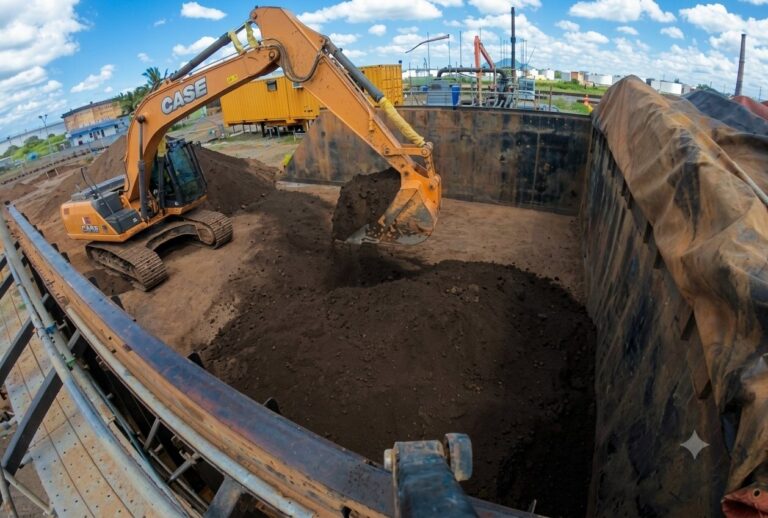
Coordinated Multi-Cell · 40–1000 m³
Fixed or semi-permanent installation delivering ~1,000 m³/week. Cells operate in parallel for continuous throughput — proven at full commercial scale.
Proven at Scale
Field Deployments
Southeast Asia
Former Oil Refinery
Large-scale system treating stockpiled API separator sludge co-treated with contaminated site soils at an active refinery terminal. Odour controls enabled operation adjacent to residential areas. All contaminants reduced to non-detect.
API Sludge Treated
mg/kg Avg TPH Before
ND
All Fractions After
Middle East
Operating Oil Field — Near-Continuous Treatment
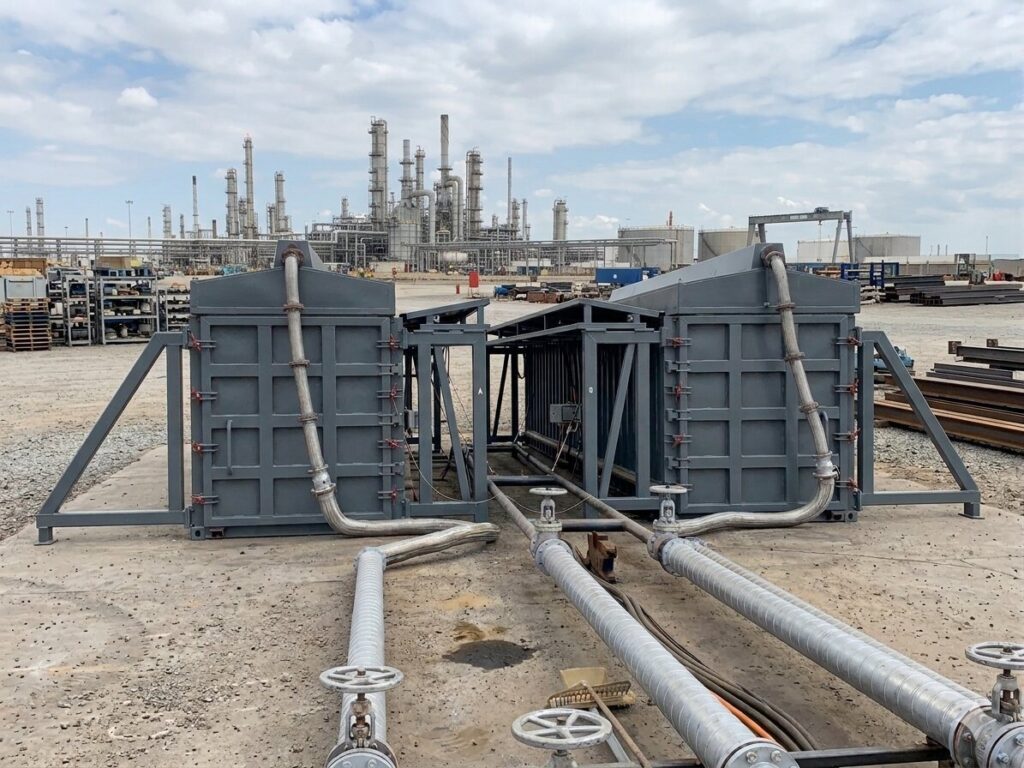
Four 200 m³ cells deployed for near-continuous treatment of consolidated oily sludge and impacted soil. Selected first over six competing alternatives following a 2017 pilot study. Local operators trained on-site for sustained operations.
Volume Treated
#1 of 6
vs. Alternatives
m³/wk Capacity
Talk to us about a waste stream
Western Environmental deploys HOTTPAD with delivery partners across Australia, Southeast Asia and the Middle East. We can assess whether your soils, sludges or residues suit on-site thermal treatment and what a trial would involve.