

Driven by Innovation. Defined by Performance.
We pair deep technical expertise with innovative thinking to solve complex environmental challenges with clarity and confidence.
Our Story
Established in 2011, Western Environmental emerged from humble beginnings — a mezzanine office above a noisy industrial laboratory with a fold-out table, secondhand computers and a printer perched atop a cardboard box. The most vital component, however, was the shared vision that united our founding directors — the application of rigorous science and technical expertise to deliver intelligent and pragmatic environmental outcomes.
That shared vision has been central to our ongoing journey — resonating with clients and quickly establishing us as a sought-after and valued collaborative partner for delivering complex environmental projects. In 2018, we opened our first interstate office in Melbourne to meet the demands of our high-value clients. This was followed by our Brisbane office in 2024, extending our reach to all corners of Australia — an intentional growth strategy focused on being where our clients need us to be.
As our reputation and project portfolio have grown, so too has our focus, expanding across multiple geographies and environmental disciplines. Yet through it all, we’ve always been guided by the same vision — combining deep technical expertise with genuinely innovative solutions. We invested in building our capabilities during the early-phase of PFAS management in Australia, developing intelligent and pragmatic assessment and treatment methods. This is one of our defining strengths — seeking out complexity and applying our knowledge to develop globally recognised, industry-leading expertise — which led to our first major international project award in 2023, taking our extensive PFAS knowledge into the US market.
In 2026, we launched our Environmental Technology division, created specifically to find solutions for the most complex, emerging environmental challenges, accompanied by our Innovation Hub — our first international office in Southeast Asia. This extends our remit to new frontiers in applied research and technology development for emerging contaminants and recalcitrant waste treatment. It’s a deliberate response to a rapidly changing world — by harnessing cutting-edge tools like AI to develop unique insights, and adding even deeper technical expertise in applied science, we’ve built a fully integrated environmental problem-solving capability that is second to none.
More than a decade on, the fundamentals haven’t changed — and they never will. We back rigorous science. We back our people, and we back the clients who trust us with their most difficult problems. As new contaminants emerge, the world continues to change, and our clients keep pushing into new markets, we’ll keep investing in the science, the technology, and the people needed to stay ahead of what’s still to come.
We don’t respond to change. We lead it.
professionals located across multiple jurisdictions, combining local knowledge with global expertise.
strategically located offices across Australia and internationally.
complex and high-risk projects successfully delivered since 2011
Leadership

James Gibson Director / Remediation Expert
James is the current Managing Director of Western Environmental and a Senior Principal Environmental Scientist, with extensive technical and strategic acumen and deep subject-matter expertise in the remediation of Per- and Polyfluoroalkyl Substances (PFAS). He takes a keen interest in PFAS research and development, having been actively involved in several projects developing novel treatment methods for water and solids — work that has resulted in Western Environmental holding a range of intellectual property licences to deploy various technologies throughout Australasia.
James specialises in the design and application of technologies to treat water, wastewater and other liquid wastes with complex and challenging hydrochemistry. He developed this interest early in his career in Western Australia, where the management of construction dewatering presents several distinct challenges. From pH chemistry and solids removal to heavy-metal coagulation, complex filtration and rapid catalytic oxidation, he has designed and deployed numerous systems that continuously meet stringent environmental discharge criteria in high-pressure construction environments.
He has since developed a broader skillset in treating organic contaminants as part of specific site remediation projects. Initially, he developed solutions for hydrocarbons, pesticides and other conventional contaminants, but in more recent years he has designed more complex solutions to treat PFAS, dioxins and furans, and radionuclides. This experience also extends beyond surface water and groundwater to batch-scale, complex liquid-waste mixtures and other bespoke solutions for problematic sites — innovatively reducing chemical usage, waste by-product volumes and media consumption, to optimise processes and significantly reduce costs.
James also conducts Basis of Design (BOD) and Conceptual Design Reviews, treatability studies and pilot treatment programmes for sites and plants failing to meet required discharge criteria — identifying pathways to rapidly modify existing systems and achieve certainty in water quality outcomes.
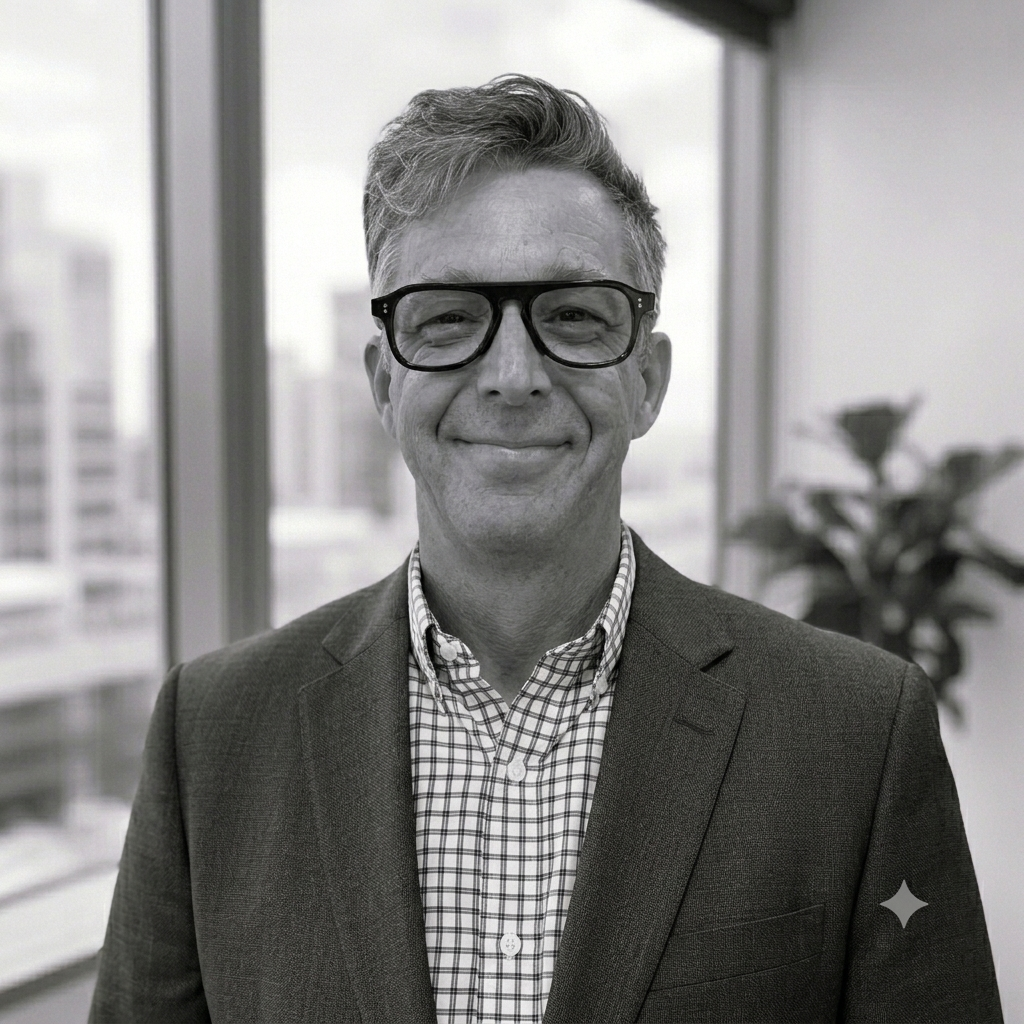
Dave Thomas Director of Environmental Technology and R&D
Dave Thomas is a rare kind of environmental technologist: an inventor who takes ideas from the whiteboard to field-proven, commercially licensed solutions for waste and remediation problems others write off as intractable. A former Chevron Fellow — the highest technical rank in the company, held by only a handful of experts worldwide — he is the named inventor on more than 30 patents, many of which are now licensed and in use in Australia and internationally.
His breakthroughs target the highest-risk and most difficult-to-manage legacy wastes and emerging contaminants. He led the team that invented and deployed HOTTPAD™ smouldering combustion to destroy oily sludge, PFAS and asbestos, achieving more than $200 million in savings on a single remediation programme in the Middle East and earning the American Academy of Environmental Engineers & Scientists’ Grand Prize for Innovation in Industrial Waste Practice.
He also pioneered electrokinetic in situ treatment of contaminated groundwater — a national innovation-award finalist — and invented a subsea pipeline decontamination method, a finalist in the 2024 SPE Global Innovation Awards, which is projected to save more than $500 million globally over the next two decades as the oil and gas industry’s asset retirement and decommissioning efforts peak.
Across his career, his technologies have delivered more than $400 million in savings to date, a figure projected to grow significantly. For Western Environmental clients — particularly those facing challenges from emerging contaminants such as PFAS, mercury and NORM — this means direct access to a proven innovator who can engineer a cost-effective answer where conventional remediation options don’t exist.

Dave Reynolds Senior Principal Engineer / Remediation Expert
Dr Reynolds is an accredited contaminated sites auditor in Queensland and Western Australia, where he has been responsible for auditing a number of high-profile sites in the defence, aviation and government sectors, including heavily PFAS-impacted sites. He is also an expert witness providing litigation support, both as a consulting and testifying expert in Australia and internationally, and is a qualified hydrogeologist and expert modeller of single- and multi-phase flow and transport in both porous and fractured media, with extensive experience in contaminant fate and transport modelling.
Beyond his deep technical and consulting experience, Dr Reynolds is also a recognised remediation expert, with substantial experience in remediation assessment, design and implementation across multiple disciplines, including PFAS and organic contaminants. He is currently embedded within the Australian Department of Defence’s PFAS Management Branch as a Senior Remediation Advisor, responsible for overseeing some of the most PFAS-contaminated sites in Australia. His remediation experience is broad and draws on his extensive technical skillset — from designing complex in situ permeable reactive barriers to managing the design and implementation of novel ex situ thermal treatment methods.
Dr Reynolds has also enjoyed a storied career in research and development, having spent time as a tenured academic and senior lecturer, as research director of a multi-partner centre focused on groundwater issues, and as a principal investigator for the US Department of Defense Environmental Security Technology Certification Program (ESTCP), which focuses on developing technologies to combat contamination. He is also the co-inventor of electrokinetic oxidation approaches for remediating heterogeneous, low-permeability source zones, as well as the use of electromigration for in situ desalination, and has authored several ITRC guidance documents and National Academies publications.

Giorgio De Nola Senior Principal Toxicologist / Risk Assessor
Giorgio is a Senior Principal in Environmental Risk Assessment and Toxicology, with over 20 years’ experience as an environmental scientist in research and development, and a further 15 years in consultancy.
His primary role is to provide technical support to the remediation professionals in the Environmental Technology business unit — carefully and specifically assessing the risk at each site so that uncertainty can be eliminated and the right remedial options identified and selected.
Giorgio has provided advice and prepared numerous Human Health (and Ecological) Risk Assessments (HHRA, HHERA, ERA and similar) for sites requiring remediation, from defence and aviation through to land development, industrial, landfill, mining, gasworks and energy sites. He has specific skills in assessing materials for reuse, such as thermally treated materials, applying the latest guidance both in Australia and internationally, and providing the basis for developing innovative approaches to reducing liability.
In recent years, this passion has focused on understanding PFAS chemistry, including its physicochemical properties, environmental behaviour, toxicokinetics and toxicology. He has also contributed to guidance documents for biosolids, drinking water guideline documents for PFAS and metals, APVMA assessments of pesticides, toxicological risk assessments of medical products and impurities, and exposure standards for particulate matter and silica.
Giorgio is a member of the Australian College of Toxicology and Risk Assessment (ACTRA) and sits on the Risk Assessment sub-committee of the Australian Contaminated Land Consultants Association (ACLCA) in Victoria.
National Presence

Legend
Values and Approach

Knowledge: rigorous, curious, always evolving
We pursue excellence in every project, drawing on specialist technical capability, industry-leading safety standards and ongoing professional development to deliver consistently high‑quality work and a strong reputation for results.
Our teams stay ahead of emerging regulation, technologies and best practice so clients can plan with confidence in a rapidly changing landscape.
Integrity: trust built through transparency
We value honesty and reliability, building long-term relationships with clients, regulators and communities based on clear communication, realistic commitments and delivery that matches our promises.
Our advice is independent and evidence-led, ensuring recommendations are made in the best interests of the environment and our clients’ licence to operate.
Join a team where your work makes a real difference.
At Western Environmental, our people are our greatest asset. We’re proud to be an employer of choice, with a culture built on community, knowledge, integrity, and genuine care for one another.
Whether you’re growing your career or looking for your next meaningful opportunity, you’ll be part of a team that values collaboration, supports professional development, and offers industry-leading benefits and opportunities. If you’re motivated by purpose and want to contribute to a company that values both its people and its impact, we’d love to hear from you.
